.png)
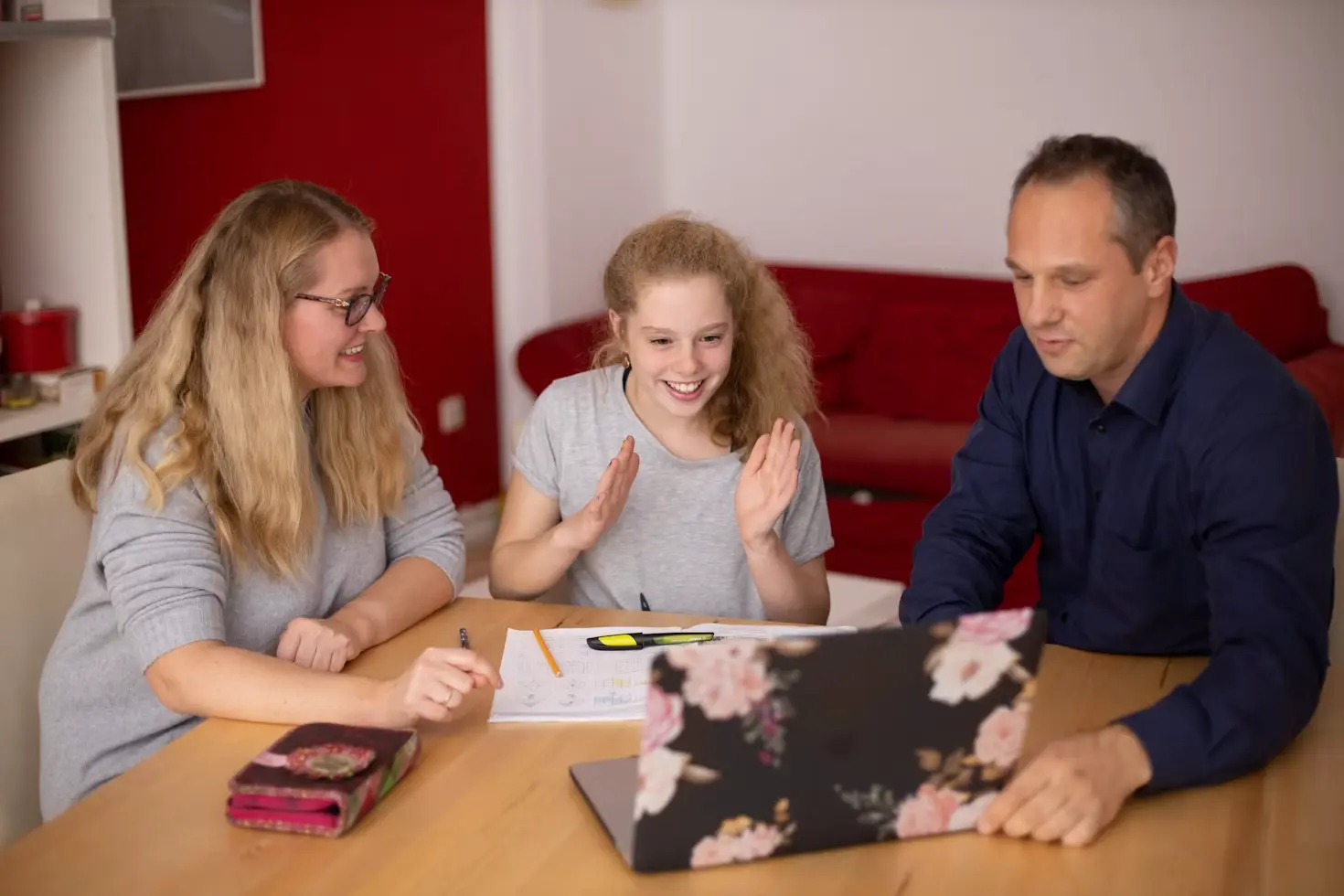
An exchange student is a high school student from another country who lives with a volunteer host family and attends a local U.S. high school. They usually stay for one semester or one academic year on a J-1 Exchange Visitor visa, sponsored by an organization the U.S. Department of State has designated for that purpose.
At Ayusa, we've been matching host families with exchange students since 1981, and we're a founding member of the Council on Standards for International Educational Travel, the body that certifies exchange programs in the United States.
The terms exchange student, international student, F-1 student, and study abroad student are often used as if they mean the same thing, but they don't. The visa, program structure, length of stay, host-family arrangement, and rules can all be different. This guide breaks down what each term means and shows what hosting an exchange student can look like, from first bell to curfew.
What Does Exchange Student Mean in the United States?
An exchange student is a secondary school student, typically between 15 and 18 years old, who travels to another country to live with a host family and attend a local high school as part of a government-regulated cultural exchange program.
In the United States, the Department of State calls it the Secondary School Student category of the Exchange Visitor Program. To take part, students apply for a J-1 visa, which must be sponsored by a Department of State-designated organization.
J-1 exchange students live with a screened volunteer host family and attend an accredited secondary school. The placement is temporary and has a firm end date. A J-1 secondary school program isn't a route to permanent U.S. residency or long-term enrollment in an American high school.
Exchange Student vs. International Student vs. Study Abroad Student
These terms are often used interchangeably, but they describe different situations. The biggest differences come down to the visa or program involved, who arranges the student's placement, how the education is funded, and what happens when the program ends.
- A J-1 exchange student comes to the United States on an Exchange Visitor visa arranged by a Department of State-designated sponsor, lives with a volunteer host family, and attends a local public or private high school for a semester or an academic year. The program's purpose is cultural exchange, and the student returns home when the program ends.
- An F-1 international student in high school comes to the United States on an F-1 student visa to enroll in a specific school. Unlike a J-1 exchange student, an F-1 student generally pays tuition to the school. If the student attends a public high school, federal rules limit F-1 enrollment to 12 months and require the student to pay the school district the full, unsubsidized cost of their education. The U.S. Department of State explains these rules for foreign students attending U.S. public schools. F-1 students who want to remain in the U.S. longer or graduate from an American high school therefore typically attend private schools.
- An international student is simply someone studying outside their home country. It's a broad description, not a specific visa or exchange-program category. An international student could be a high school student, university undergraduate, graduate student, or language-school student. That's why statistics about the number of international students in the United States shouldn't be assumed to represent the number of high school exchange students.
- A study abroad student participates in an organized period of study outside their home country, usually while remaining enrolled with their home school or university and earning academic credit that transfers back. For example, American teenagers who spend a semester abroad through Ayusa's student programs are participating in study abroad, rather than coming to the U.S. as J-1 exchange students.
How Many Exchange Students Come to the United States Each Year?
According to U.S. Department of State participant data, 17,863 students participated in the J-1 Secondary School Student category in 2025, down from 19,077 in 2024. While you might find websites citing figures of more than 1 million "international students" in the U.S., those statistics cover students at all education levels, particularly colleges and universities.
The J-1 Exchange Visitor Program as a whole serves hundreds of thousands of participants each year across categories including au pairs, camp counselors, interns, researchers, physicians, and students. Secondary school students make up a relatively small share of the total.
Who Qualifies to Become a J-1 Exchange Student?
The Department of State sets the basic eligibility requirements for the J-1 Secondary School Student category, and individual sponsors may apply additional screening criteria. Students must generally:
- Be 15 to 18½ years old when their program begins
- Have completed no more than 11 years of primary and secondary education, excluding kindergarten
- Not have previously participated in a U.S. secondary school exchange program or attended a U.S. school on an F-1 or J-1 visa
- Have sufficient English proficiency to participate successfully in a U.S. classroom and everyday family life
- Be in good academic standing, demonstrated through school records and other application materials
Ayusa also looks at factors such as maturity, adaptability, and motivation. The goal isn't simply to find students who can succeed academically, but students who are ready to become part of a family and community. Meet our students to learn more.
Who Can Host a J-1 Exchange Student?
If you’re wondering who can host, the answer is almost anyone! You don't need to be married, have children, own your home, or live in a particular type of community. Single adults, empty nesters, retirees, and families with young children or teens can all become host families.
Host families must provide:
- A bedroom with space for the student's belongings
- Three meals a day
- A plan for getting to school and school activities
- A welcoming home environment
In other words, hosting starts with the basics: a bed, a seat at the table, and a willingness to welcome someone into your family.
A Day in the Life of an Exchange Student
Once school starts, an exchange student's life looks surprisingly similar to that of any American teenager, but with a few experiences that may be completely new.
School Days
Most students wake up around 6:00–6:45 a.m. and arrive at school in time for a first bell around 7:30–8:15 a.m. Depending on where they live, they may take a school bus, get a ride from their host family, or use another approved form of transportation.
The school day typically includes six to eight classes, although some schools use block scheduling. Grades usually reflect a combination of homework, quizzes, participation, projects, and exams rather than one or two major tests.
For many exchange students, the biggest surprise is the range of electives and extracurriculars available. They might take classes such as ceramics, theater, journalism, culinary arts, or computer science, then join a sports team, club, or performing arts group after school.
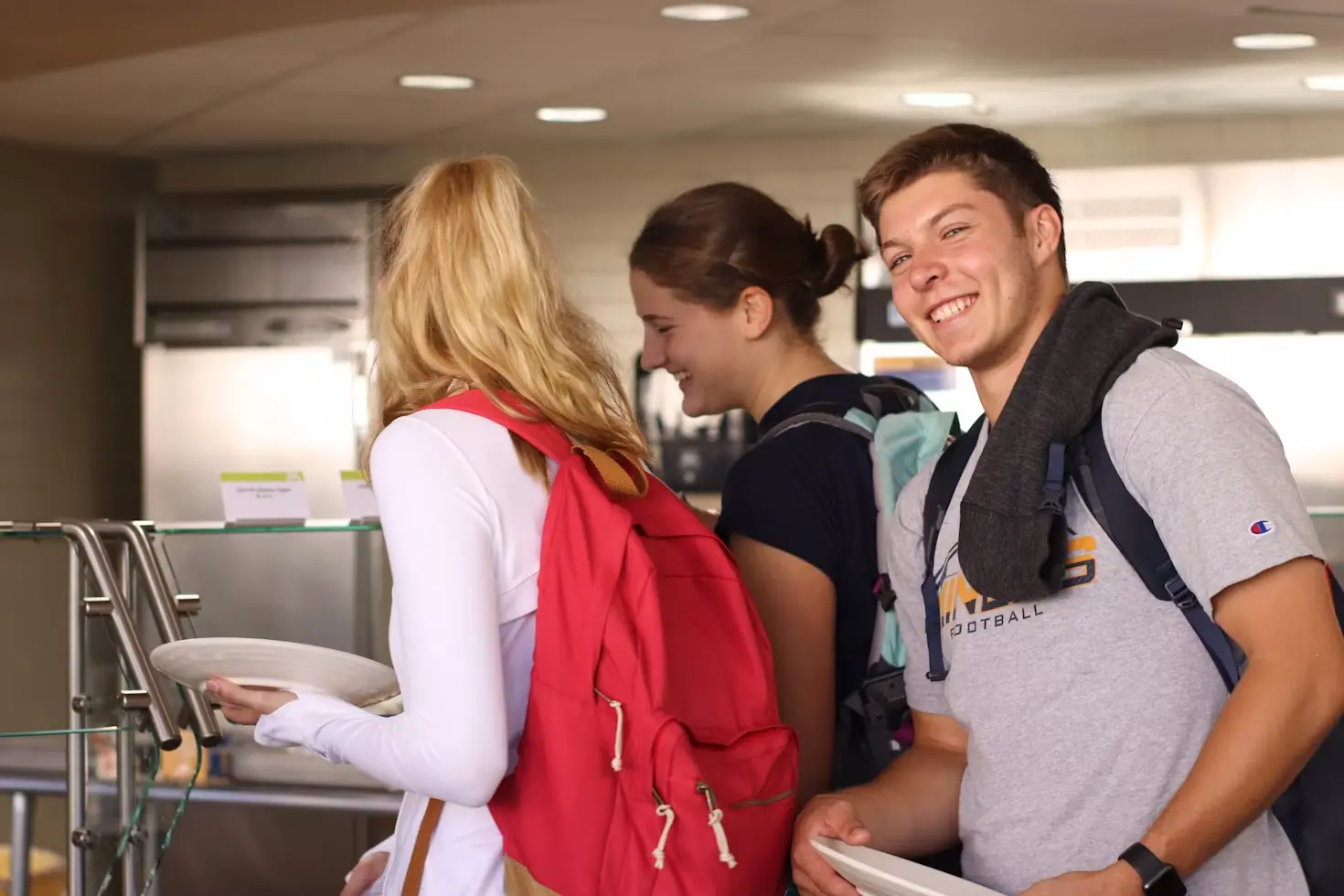
Lunch, school events, and passing periods also provide some of the most natural opportunities to make friends and experience everyday American school culture.
Afternoons, Evenings, and Weekends
The school day doesn't necessarily end when the final bell rings. Students may stay for sports, clubs, rehearsals, or other activities before heading home.
Evenings generally look like those of other teenagers: dinner with the family, homework, chores, and some downtime before a host-family-set curfew. Weekends might mean a football game, family errands, a sibling's soccer match, a community event, or simply spending time together at home.
Those ordinary experiences are a big part of cultural exchange. Thanksgiving dinner, homecoming, prom, a first American football game, or a family road trip can become some of the memories students take home with them.
A Few Important Rules
J-1 exchange students also have some program-specific restrictions:
- Employment isn't permitted, although occasional babysitting or yard work may be allowed
- Students generally can't live with relatives during the program
- School sports require eligibility approval, and rules vary by state and school district
- The program is temporary, typically lasting one semester or academic year
Ayusa families aren't expected to navigate the experience alone. Department of State rules require sponsors to maintain regular contact with exchange students and host families, and Ayusa Community Representatives provide local support throughout the program.
How an Exchange Student Is Matched With a Host Family
Sponsors look at the student's interests, personality, household expectations, and school fit to find a placement that works for both sides. Here's how it usually goes:
- The student applies through a partner organization in their home country and provides academic records, recommendations, an English assessment, health information, and a letter to a prospective host family.
- The sponsor reviews the student and creates a profile that includes interests, dietary needs, allergies, and other relevant information.
- The host family applies and completes screening, including an in-home interview, reference checks, and background checks for adult household members.
- The host family reviews student profiles and expresses interest to their Community Representative when they believe a student would be a good fit for their family.
- The school confirms enrollment before the placement is finalized.
- The student completes the visa process, including receiving a DS-2019 and applying for a J-1 visa, while the sponsor coordinates arrival arrangements.
- The student arrives and begins the program with ongoing support from the Community Representative.
As a host family, the earlier you start your hosting application, the more exchange students there are to review.
How to Choose a Reputable Exchange Student Program
Not every organization offering student exchanges operates under the same standards. Before committing to a program, look for a few basic safeguards:
- Department of State designation: For a J-1 exchange, the organization should be a current Department of State-designated Exchange Visitor Program sponsor.
- Independent program standards: Check whether the organization appears on the CSIET Advisory List, which evaluates exchange programs against established standards.
- Local support: There should be a named local representative who can meet with your family and provide ongoing support.
- Thorough host-family screening: Look for in-home interviews, reference checks, and background checks for adult household members.
- Placement support: Ask what happens if a student and host family aren't a good fit and what the process is for changing placements.
- Emergency assistance: Reliable programs should provide access to emergency support throughout the program.
Ayusa has operated as a Department of State-designated sponsor since 1981 and is a founding member of CSIET. Its parent organization, Intrax, has placed more than 500,000 participants across its programs since 1980.
Ready to Meet Your Ayusa J-1 Exchange Student?
The definition of an exchange student is straightforward, but the experience is much harder to explain. It's a 16-year-old learning to make your grandmother's pie, your family discovering a new culture around the dinner table, and your own kids suddenly asking questions about a country they had barely thought about before. Hosting does involve a real commitment, but for families who are ready for it, the experience can create long-lasting friendships and priceless memories.
If you're ready to learn more, start your hosting application or request information, and an Ayusa Community Representative near you will be in touch.
Frequently Asked Questions About Exchange Students
What is the difference between an exchange student and a foreign exchange student?
Nothing at all. "Foreign exchange student" is what most Americans say out loud, "exchange student" is the shorter version, and the U.S. Department of State's own regulatory category is called Secondary School Student. All three describe the same kid at your dinner table.
How long does an exchange student stay in the United States?
Most stay for one academic year, which lasts for about 10 months from a late summer arrival to an early summer goodbye. Semester programs of about five months are available too, and are a great option if you’re not quite ready to commit to a full year yet. Fair warning: plenty of families tell us the year went faster than they were ready for!
Do exchange students pay tuition to attend a U.S. public high school?
J-1 exchange students aren't subject to the tuition reimbursement rule that applies to F-1 students in public high schools, where federal rules require full, unsubsidized per capita repayment and cap attendance at 12 months. Your placement still depends on the local district agreeing to accept the student, and district policies vary, so that's a conversation your sponsor handles early.
Can an exchange student choose where in the United States they live?
No. Students are matched with a host family and a school that has agreed to accept them, and they don't pick a city or a state. They can share preferences on the application, but what drives the placement is compatibility with the host family and the school's willingness to enroll them. Most students will tell you afterward that they can't imagine having landed anywhere else.
Do exchange students need to speak English before they arrive?
Yes. Sponsors have to verify that a student has enough English to do well in a U.S. classroom and to handle daily life with their host family, and we assess that during screening at Ayusa. Nobody expects or demands fluency, and most students improve dramatically within the first few months. You'll get to watch it all happen at your own kitchen table.
Can an exchange student work or get a driver's license?
Your student can't hold regular employment, though occasional yard work or babysitting is fine. Ayusa students are not permitted to drive during the program.
What happens if an exchange student and a host family are not a good match?
Your Community Representative steps in first, usually with a conversation that includes everyone in the household, and most bumps get sorted out right there. If the placement still can't work, the sponsor arranges a move to a different host family.
Do host families get paid to host an exchange student?
No. Host families are volunteers and receive no salary or stipend for hosting a J-1 exchange student. Families who itemize deductions may be able to claim up to $50 per month as a charitable deduction for hosting through a qualified organization like Ayusa. Our page on do you get paid to host a foreign exchange student covers the tax rules in full.
You can find more answers for families on our families FAQ.